

Student Visa Requirements for South Africans Studying Abroad in 2027
Learn how South Africans can apply for a student visa abroad in 2027, including bank statements, proof of funds, visa fees and country-specific requirements.
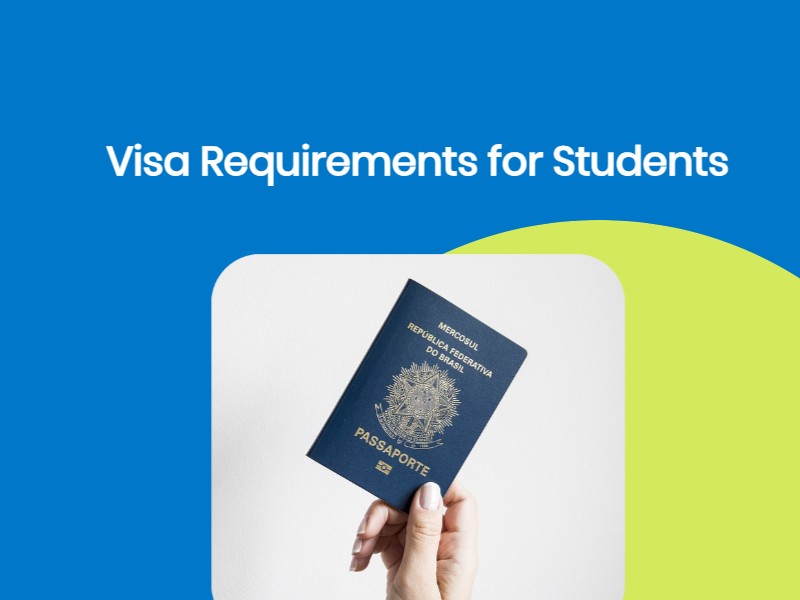
How South African Students Can Apply for a Student Visa to Study Abroad
Getting accepted by a university is a big step, but it does not automatically give you permission to study in another country.
You may still need a student visa or study permit, and one of the biggest parts of the application is proving that you can afford to live and study there.
This is where students can run into problems. You might have an admission letter, good marks and enough money in your family's bank account, but still need to explain who is paying for your studies and where that money came from.
The requirements also differ between countries. Germany uses a blocked account system for many students, the UK has a rule about how long your money must remain in your account, and Canada looks at your finances alongside your plans for paying for the full course.
Let's look at how the process works for South Africans, what you should prepare and the details that are easy to miss.
1. Get your university admission documents first
Before applying for a student visa, you will usually need proof that a university or college has accepted you. The exact document depends on the country.
For the UK, you need a Confirmation of Acceptance for Studies (CAS) from your education provider. For Canada, you generally need a Letter of Acceptance from a designated learning institution. For Germany, you normally need admission to a state-recognised higher education institution.
This is why choosing a university matters beyond tuition fees. A university may accept your South African National Senior Certificate, but you still need to meet its admission requirements and complete the separate immigration process.
We have covered this in our guide to universities abroad that accept a South African NSC matric certificate. Once you have found a university and received the right admission documents, you can start preparing your visa application.
Do not book non-refundable flights simply because you have been accepted. Wait until you understand the visa process and have allowed enough time for a decision.
2. How much money must you show for a student visa?
There is no single amount that works for every country. Immigration authorities usually want to see that you can pay your tuition, cover living costs and afford your travel without relying on finding a job after arrival.
Here are three destinations with specific financial requirements South African students should understand.
United Kingdom: Your money must be in place for 28 days
For a UK Student visa, you generally need to show enough money to pay any outstanding tuition fees for the first academic year, up to nine months, plus money for living expenses.
As of October 2026, the living-cost amounts are:
- London: £1,529 per month, for up to nine months.
- Outside London: £1,171 per month, for up to nine months.
That means a student studying in London may need to show £13,761 for living costs alone, while someone studying outside London may need £10,539. These amounts are separate from any outstanding tuition fees you must cover.
There is another rule that matters just as much as the total. The required money must normally remain in your account for at least 28 consecutive days, and the end of that period must fall within 31 days of your visa application.
For example, if you plan to apply in November, do not wait until the last minute to transfer money into your account. You need to plan backwards from your intended application date so the required 28-day period is complete.
South African applicants should also note that South Africa is not on the UK's current list of countries covered by its differential evidence requirement. You should therefore prepare to provide financial evidence, even though some applicants from other countries may not need to submit it with their initial application.
The Student visa application fee is £558 under the fee schedule effective from 8 April 2026. You may also need to pay the Immigration Health Surcharge, which is a separate cost.
The figures above come from the UK government's Student visa financial requirements and its current visa fee schedule.
Canada: Immigration wants to understand where your money comes from
Canada requires you to show that you can pay your tuition fees, living expenses and transportation without needing to work in Canada to fund those costs.
For a single student applying on or after 1 September 2026, the minimum living-expense amount is CAD $23,448 for one year when studying outside Quebec. This excludes tuition and travel costs. Quebec has separate financial requirements.
You might use personal savings, a student loan, a scholarship or financial support from your parents. However, having the required balance is not the whole story. Your documents need to show that the money is genuinely available to you.
For example, if your parent is funding your studies, prepare evidence of your relationship, a clear letter explaining the support they will provide, and documents showing their financial position. If you are using your own savings, bank statements and records explaining where the money came from can help support your application.
Canada specifically lists bank statements covering the past six months as one possible form of financial evidence. It also accepts other documents, including proof of scholarships, education loans and certain Canadian bank accounts or investment certificates.
A useful distinction: Canada does not simply require every student to submit the same set of bank statements. The documents must be enough to establish that the money is available and that you can afford your studies.
There has also been an important change for 2026. Students entering eligible master's and doctoral programmes at public designated learning institutions no longer need a provincial or territorial attestation letter (PAL/TAL) for their study permit application. Eligible PhD applicants and accompanying family members may also qualify for faster processing. These changes do not mean that all Canadian study permit requirements have been removed.
The Canadian government's proof-of-funds guidance explains acceptable financial evidence, while its study permit application guide covers the application process.
Germany: You may need a blocked account
Germany works differently from the UK and Canada. Many international students prove that they can support themselves by opening a blocked account, known as a Sperrkonto.
You deposit the required amount before travelling, but you cannot withdraw all of it at once. Instead, the account releases a set amount each month to help cover your living expenses.
For 2026, the German government's official study visa guidance lists €11,904 as the amount required in a blocked account. That works out to €992 per month. A recognised scholarship or a formal declaration of commitment may be accepted as an alternative in qualifying cases.
The money is intended to cover living costs, not automatically your tuition fees. If your university charges tuition, you still need to budget for that separately.
This is worth planning for early because transferring a large amount of money internationally can take time, and you may need to arrange the account before submitting your visa application.
Germany is also worth considering if you are comparing the total cost of studying overseas. Our guide to the cheapest countries to study abroad for South African students explains why tuition fees alone do not tell you how affordable a destination will be.
You can find the current financial requirement and the alternatives to a blocked account in the German government's official study visa guidance.
3. What should your bank statements actually show?
This is one of the most important parts of preparing a student visa application, particularly if your parents or another family member will pay for your studies.
A bank statement should help establish three things: that the money exists, that you can access it, and that its source makes sense.
Suppose your parent has been saving from their salary for several years. Their bank statements, payslips and an explanation of how they will support you can help show where the money came from.
Now suppose a large amount suddenly appears in the account shortly before you apply. That does not automatically mean your application will be refused, but it may raise questions if the documents do not explain the deposit. A recent transfer from another account, the sale of an asset or a legitimate loan may have a clear explanation, but you should be ready to document it.
Here is what we recommend preparing when someone else is paying for your studies:
- Bank statements covering the period required by your destination.
- A signed letter explaining who will pay and which expenses they will cover.
- Proof of your relationship to the person funding you.
- Evidence of their income or the source of the savings, where relevant.
- Your scholarship or student-loan letter, if you are using one.
- Receipts showing tuition or accommodation payments already made, where applicable.
Do not assume that a large bank balance is enough on its own. Equally, do not assume that every country requires six months of statements or the same type of financial proof. The UK's 28-day rule and Canada's guidance on the source of funds are different requirements, and Germany's blocked account system works differently again.
If you are using a scholarship, read the award letter carefully. A scholarship that pays tuition only may leave you needing to prove that you can afford rent, food, travel and other expenses.
4. What documents should you prepare before applying?
Your final document list depends on your destination, but most students should begin gathering the following:
- A valid passport.
- Your university admission letter or the required immigration admission document.
- Academic certificates and transcripts, if requested.
- Proof of finances, including scholarship or sponsorship documents where relevant.
- Proof of English proficiency or other language requirements, where applicable.
- Medical or health insurance documents, if required.
- Visa application forms, photographs and biometric appointment details, where applicable.
If you have not taken an English test, do not automatically book IELTS before checking your university's rules. Some universities accept alternatives or grant exemptions to eligible South African applicants. Our guide to countries where South Africans can study in English without IELTS explains why an English-language exemption from a university is not the same thing as a visa exemption.
You should also budget for application fees, medical tests, translations or certified documents where required. These expenses can add up before you have even bought your plane ticket.
5. When should you apply for your student visa?
Start preparing as soon as you have a firm admission offer and understand the financial requirements. Do not leave the whole process until a few weeks before classes begin.
For the UK, applications are made online and students applying from outside the country usually receive a decision within three weeks, although some cases take longer. The application process may involve identity checks, biometrics and additional documents.
For Canada, study permit applications are generally submitted online. You may need to give biometrics, and you should allow time to obtain any required provincial or territorial attestation letter. Eligible master's and doctoral students at public institutions are exempt from the PAL/TAL requirement under the 2026 rules.
For Germany, arrange your proof of funds early if you plan to use a blocked account. You should also allow time for visa appointments and document processing.
Processing times can change, and an advertised standard is not a guarantee that your own application will be decided within that period. Check the relevant country's current processing information before booking travel.
Common mistakes that can delay a student visa application
One mistake is applying before you have the correct admission document. Another is showing enough money for tuition but forgetting living costs or travel.
Students can also run into trouble when the person funding them is not clearly identified, when large deposits have no supporting explanation, or when they submit documents that do not match the information in their application.
Finally, do not assume that a university's admission decision guarantees a visa. The university decides whether to admit you; immigration authorities decide whether you meet the requirements to enter and study in that country.
The best approach is to prepare your finances and documents before submitting the application. Make sure your bank statements tell a clear story, your admission documents are correct and your budget includes costs beyond tuition.
If you are applying straight from Grade 12, read how to study abroad after matric without a gap year and compare affordable study destinations for South Africans before locking in a country.
Studying abroad is a major expense, so getting the paperwork right can save you money, time and a great deal of stress.
What's Your Reaction?
 Like
0
 Dislike
0
 Love
0
 Funny
0
 Wow
0
 Sad
0
 Angry
0

Your trusted hub for youth opportunities in South Africa. From learnerships and courses to universities and colleges, we make it simple to find the right path for your future.












Comments (0)