

Top Solar Installation Training Courses & Centres in South Africa
Compare solar installation training courses in South Africa, including PV GreenCard training, course fees, requirements and training centres.
Solar Installation Training Courses in South Africa: Where to Study and What You Will Pay
Solar panels are becoming a familiar sight on South African homes, shops, farms and commercial buildings. But installing a solar system involves more than fixing panels to a roof. Installers need to understand electricity, inverter settings, batteries, system sizing, protection equipment and safety requirements.
If you want to study solar installation in South Africa, the first decision is what you actually want to learn. A short introductory course can help you understand solar technology, while a dedicated photovoltaic (PV) installer course covers more of the work involved in installing a system.
There are also specialist courses for electricians, technicians and people who want to design larger solar installations.
We have found several options worth comparing, including training providers that publish their fees and upcoming course dates.
Start by choosing the right kind of solar course
Not every course advertised as solar training prepares you for the same work.
|
Type of training |
What it focuses on |
Best suited to |
|---|---|---|
|
Solar fundamentals |
How panels, batteries and inverters work; basic system concepts |
Beginners exploring the industry |
|
PV installation training |
Installation planning, mounting, wiring principles, testing and commissioning |
Aspiring installers and people with a technical background |
|
PV GreenCard training and assessment |
Installer competence against the PV GreenCard programme's requirements |
People working towards PV GreenCard installer status |
|
Solar system design |
Load calculations, panel and inverter sizing, battery capacity and system configuration |
Technicians, electricians, designers and experienced installers |
|
Solar maintenance |
Inspections, monitoring, fault-finding and performance checks |
People who service existing installations |
One important detail: completing a short solar course does not automatically make someone a qualified electrician or authorise them to carry out every type of electrical installation. We will explain that distinction below.
Solar installation training courses to compare
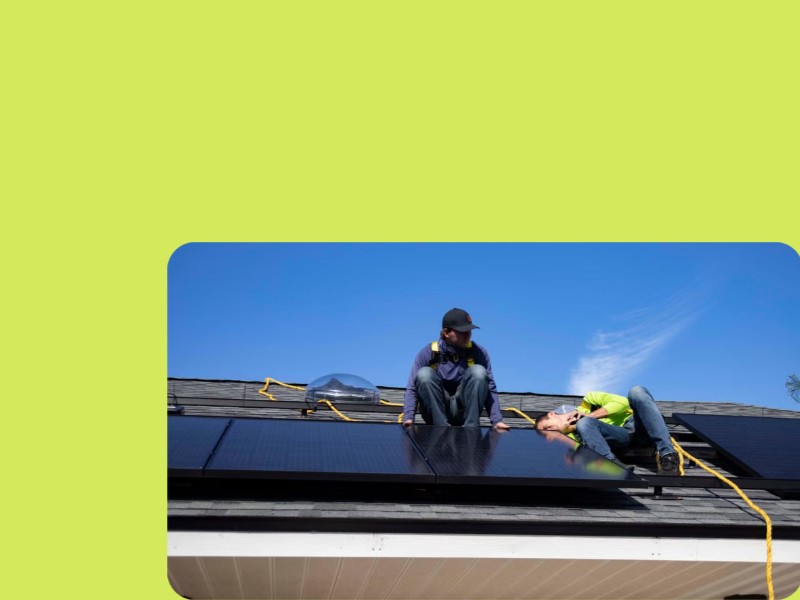
Rather than choosing a school based only on the words “solar certificate” in its advertisement, compare the course content, the amount of practical work, the assessment offered and what the certificate actually represents.
1. GREEN Solar Academy:
GREEN Solar Academy offers a selection of courses in South Africa, with training locations including Johannesburg, Cape Town, Ballito and Gqeberha. Its course options range from introductory training to installer preparation and commercial system design.
Here are examples from its published course listings:
|
Course |
Duration |
Published fee |
|---|---|---|
|
Solar 101 |
2 days |
R4,900 excl. VAT |
|
PV Mounter |
2 days |
R4,900 excl. VAT |
|
SuperSolarSchool |
5 days |
R13,500 excl. VAT |
|
PV System Operation and Maintenance |
1 day |
R3,300 excl. VAT |
|
Commercial PV Design |
3 days |
R7,200 excl. VAT |
|
PV GreenCard assessment |
2 days |
R5,996 excl. VAT |
These are published prices from the provider's course schedule and may change. The academy lists upcoming sessions, so check the booking page for the date and location you need before paying.
The courses serve different purposes. Solar 101 is an introduction for people without a technical background. PV Mounter concentrates on mounting solar panels and installation-related safety.
SuperSolarSchool covers a broader set of topics, including system components, sizing, installation and commissioning. Commercial PV Design is aimed at people who want to work with larger commercial and industrial systems.
If you want to move towards PV GreenCard installer status, do not assume that attending SuperSolarSchool alone gives you that status. Training and assessment are separate steps.
Course details and bookings: GREEN Solar Academy
2. Nepoworx: PV GreenCard-related training
Nepoworx advertises its NepoSolar Pro Certification and PV GreenCard-related training, with listed locations including Johannesburg, Durban, Cape Town, Gqeberha and Mpumalanga.
Its published booking page lists a fee of R8,500 for NepoSolar Pro Certification, with upcoming dates displayed on the site. Confirm the exact course included in your booking, the venue, and whether assessment fees are included before making payment.
This is an option worth investigating if you want solar-specific training rather than a general renewable-energy introduction. However, a provider's marketing description is not enough on its own to establish that a particular branch or venue is endorsed to deliver PV GreenCard training or assessment.
Check the official PV GreenCard centre directory before enrolling.
- Course information: Nepoworx PV GreenCard training
- Official endorsement directory: PV GreenCard training centres
3. Life Training Centre, Randburg: an entry-level option
Life Training Centre lists a three-day Solar PV Technology Training Course at its Randburg location in Johannesburg. The published fee is R3,880.
The course description covers solar technology, the basic operation of PV systems, system sizing, multimeter use, panel output testing, battery testing and troubleshooting. These topics can help a beginner understand the equipment and measurements involved in solar systems.
There is an important limitation stated by the provider: the certificate of attendance is not valid for signing off a Certificate of Compliance (CoC).
That makes this course worth considering for introductory learning, but it should not be confused with an electrician qualification or a complete route to independently signing off electrical installations.
Check the provider's current price, dates and course details before registering.
Course page: Life Training Centre Solar Power Systems Course
4. IEPA: training aligned with the PV GreenCard programme
The Institute of Electrical and Power Engineers (IEPA) advertises SAPVIA Solar PV GreenCard installers training. Its published course information describes a combination of online introductory material, theory and in-person practical sessions.
The course outcomes include understanding PV configurations, preparing for installation, installing mechanical and electrical components, and maintaining and testing PV equipment. Participants may then apply for the required assessment at a suitable PV GreenCard assessment centre.
IEPA has advertised a course running in October 2026, but availability for that intake may change. Contact the organisation for the next confirmed date and a current fee; I could not verify a current course price from the published listing.
Course information: IEPA PV GreenCard training
5. AfriScience Group: solar design, installation and maintenance
AfriScience Group offers a five-day Solar Power Systems: Design, Installation and Maintenance course. Its published schedule lists an online option at R8,500 and classroom training in South Africa at R19,950 per delegate, with a Johannesburg session listed for January 2027.
The course covers topics such as solar resource assessment, panel and inverter selection, array configuration, mounting, cabling, protection, earthing, battery sizing, commissioning and maintenance.
This is a more expensive option than an introductory course. It may be more relevant to people who already work in electrical, technical, facilities or energy-related roles and need broader system-design knowledge. Before booking, confirm the next available date, delivery format, entry expectations and the exact certificate awarded.
Course details: AfriScience Group Solar Power Systems course
What does solar installation training cost?
The prices above show why it is worth comparing course content before deciding how much to spend.
A short introductory course can cost less than R4,000, while a two-day mounting course or introductory solar course may cost around R4,900 before VAT. A five-day installer-focused course can cost R8,500 to R13,500 depending on the provider and course. More specialised design training may cost considerably more.
These figures are examples from published provider listings, not a guaranteed price range for every solar training centre in South Africa.
Also check whether the fee includes:
- VAT and course materials.
- Practical sessions using actual solar equipment.
- The final assessment, where applicable.
- A certificate of attendance, a course-completion certificate or a separate competency assessment.
- Travel and accommodation if the training takes place in another province.
A course with a lower upfront price is not necessarily the better deal if you still need to pay separately for assessment or further training.
What is the PV GreenCard, and do you need it?
The PV GreenCard programme is associated with the South African Photovoltaic Industry Association (SAPVIA). It is intended to support the quality and safety of solar PV installations by assessing installer competence and documenting installations against the programme's requirements.
The official programme distinguishes between training centres and assessment centres. Its website specifically advises learners to verify a centre's endorsement and location, because endorsement applies to the listed locations.
This matters when comparing training advertisements. A school might offer useful solar training without being authorised to conduct the PV GreenCard assessment. Equally, attending an endorsed training course does not necessarily mean you have completed the assessment successfully.
Before registering, use the official PV GreenCard training and assessment page and the list of endorsed training centres. Ask the provider to confirm in writing what the course includes and what you must do after completing it.
Can you install solar panels after completing a short course?
This is one of the most important questions to ask before spending money on training.
A solar course certificate and an electrical qualification are not interchangeable. A short course can teach you about PV equipment, mounting, system design or maintenance, but it does not automatically confer the legal status of a qualified electrician.
The work involved in a solar installation can include both mechanical tasks and electrical work. What you are permitted to do depends on your existing qualifications, the nature of the work and the applicable electrical rules.
For work that requires a Certificate of Compliance, completing a solar course alone does not authorise you to sign that certificate. Do not assume that a PV GreenCard, a certificate of attendance or a provider's own course certificate replaces the relevant electrical qualifications and registration requirements.
If your aim is to become a professional installer, ask the training provider these questions before enrolling:
- Is the course endorsed for PV GreenCard training at this exact venue?
- Is the PV GreenCard assessment included, or must it be booked separately?
- What qualifications or experience are expected before enrolling?
- Does the course cover residential grid-tied systems, off-grid systems, hybrid systems, or only selected topics?
- What work can you realistically perform after completing the course, given your current electrical qualifications?
For official programme information, start with the PV GreenCard website and verify electrical compliance requirements with the relevant authorities before undertaking work that requires formal sign-off.
What should you learn during a good solar installation course?
The course outline should tell you more than just how many days you will spend in class. Depending on the course level, useful topics include:
- Solar PV basics: How panels generate electricity and how output changes with sunlight and temperature.
- Inverters and batteries: The differences between grid-tied, hybrid and off-grid configurations.
- System sizing: Estimating electricity demand and selecting suitable panels, inverters and battery capacity.
- Mounting and safety: Correct panel mounting, roof work and the use of suitable safety equipment.
- Electrical protection: Understanding cables, isolation, earthing and protective devices.
- Testing and commissioning: Checking that a system has been installed and operates as intended.
- Maintenance and fault-finding: Identifying performance problems, monitoring equipment and testing components.
A beginner course will not necessarily cover all of these topics in depth. That is fine, provided you understand what is included and what further training you may need.
If you are comparing technical short courses more broadly, also look at forklift training centres in South Africa and drone pilot training courses in South Africa for other skills pathways.
How to avoid paying for the wrong course
Before making a payment, check the provider's actual training venue, the next confirmed intake and the name of the certificate you will receive. If the advertisement promises accreditation, ask which organisation endorses the course and verify the claim directly with that organisation.
Be especially careful with wording such as “internationally recognised certificate” or “become a qualified solar installer in five days.” Ask what the statement means in practice. A certificate issued by a training provider may demonstrate attendance or course completion without being a national qualification or granting permission to sign off electrical work.
If you are comparing solar training with other short courses that may help you qualify for technical work, you can also read our guide to training courses for job opportunities in South Africa.
Frequently Asked Questions
What's Your Reaction?
 Like
0
 Dislike
0
 Love
0
 Funny
0
 Wow
0
 Sad
0
 Angry
0

Your trusted hub for youth opportunities in South Africa. From learnerships and courses to universities and colleges, we make it simple to find the right path for your future.













Comments (0)